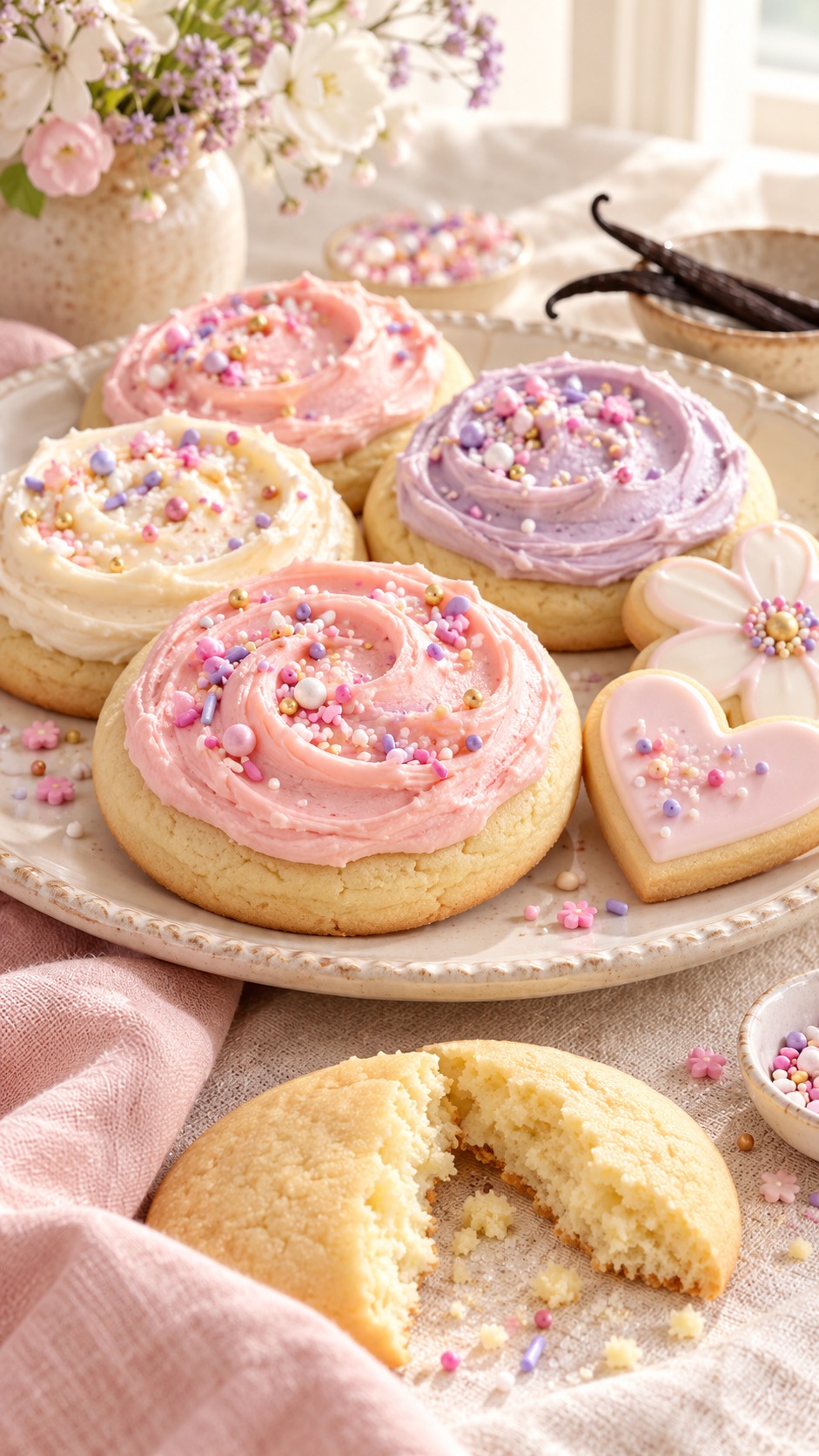
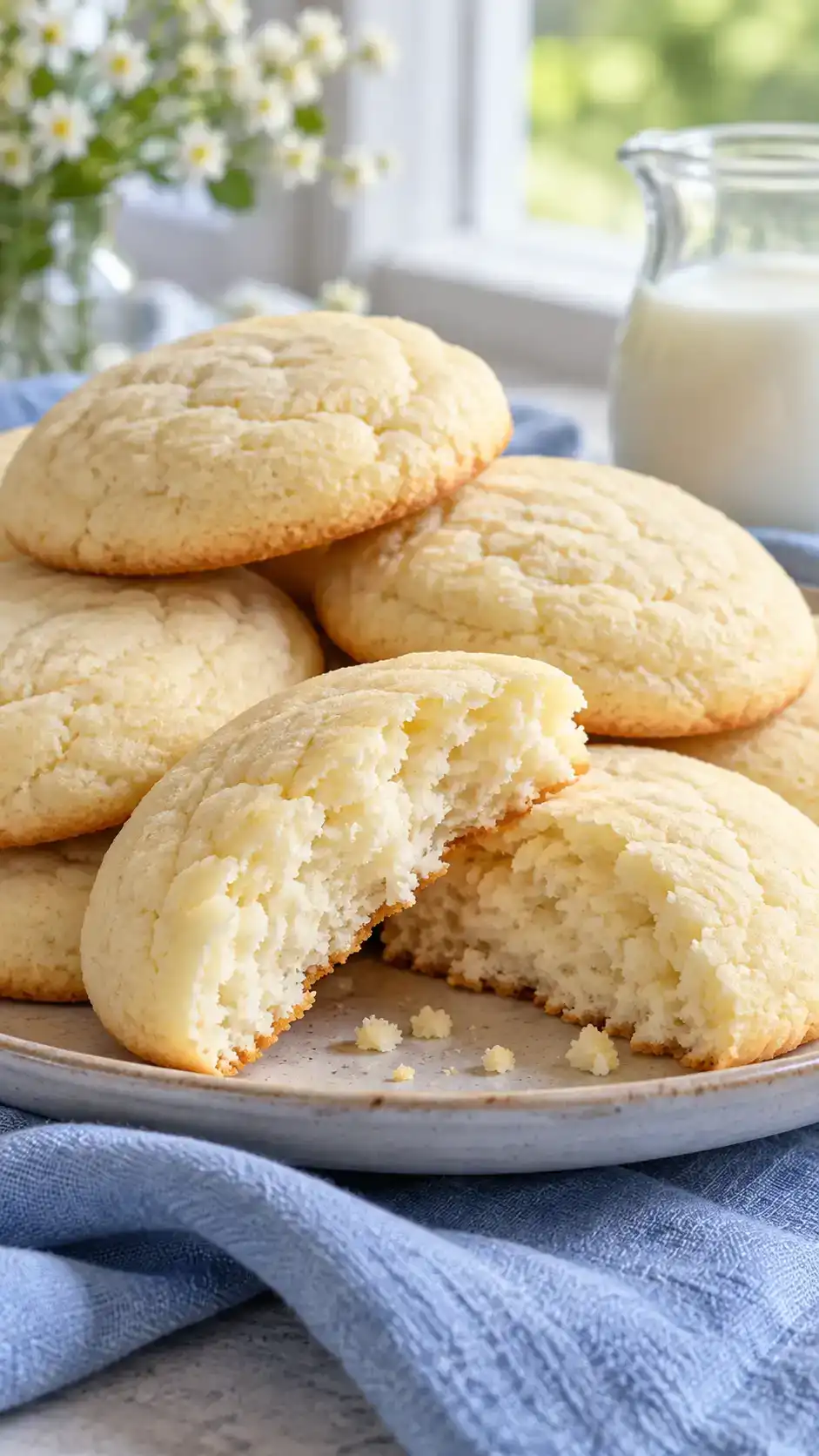
Soft, pale buttermilk sugar-cookie rounds with a tender cakey crumb and a subtle cultured tang.
The feature to preserve is the shaping: Roll chilled dough ¼ inch thick on a lightly floured surface. Cut 2½–3-inch rounds, transfer with a thin spatula and arrange 2 inches apart.
Before mixing, measure without packing the flour. Beat two large eggs together, then measure 5 tablespoons or 75 g of the mixture. Do not use two whole eggs in this halved batch: extra liquid makes the dough harder to roll.
Use the observable baking cues as well as the timer. Allow the crumb to cool before packing; the texture continues to settle after the tray leaves the oven.
Buttermilk Sugar Cookies
Per tray: 8–10 minutes · 3 batches, about 12 pieces per 13 × 18-inch half-sheet pan.
Allow about 150 minutes: 35 hands-on, 60 required chilling, 30 baking all batches sequentially, 25 cooling including pan rest, and 0 finishing/set time. Preheat during preparation or final chilling. Extra trays and optional decoration add time.
Kitchen tools you’ll need
- US measuring cups and spoons or kitchen scale
- Mixing bowl and silicone spatula
- Electric mixer
- Rolling pin with ¼-inch guides
- Cookie cutters
- 13 × 18-inch baking sheets
- Parchment paper
- Cooling rack
Soft, pale buttermilk sugar-cookie rounds with a tender cakey crumb and a subtle cultured tang.
Ingredients
Scale ingredients and US equivalents, including eggs; weigh beaten egg for fractional batches. Keep piece size, thickness, oven temperature and baking time per tray unchanged. Extra trays increase whole-batch time.
Cookie dough
Instructions
Mixing
- Make the doughDissolve baking soda in half the buttermilk. Cream butter and sugar, add measured beaten egg and vanilla, then both portions of buttermilk. Mix in flour whisked with baking powder and salt until a soft dough forms.
Thermal management
- Prepare for shapingRoll the freshly mixed dough between lightly floured parchment to ¼ inch thick. Cover and chill the slabs for the stated time; keep the second slab refrigerated while cutting the first.
Shaping
- Shape the batchRoll chilled dough ¼ inch thick on a lightly floured surface. Cut 2½–3-inch rounds, transfer with a thin spatula and arrange 2 inches apart.
Baking
- Bake to the right textureHeat a conventional oven to 375°F (191°C). Bake on the center rack for 8–10 minutes, until the edges are set and the centers have lost their wet shine. Keep the tops lightly colored. Use cool pans for later trays.
Cooling
- Cool before servingRest on the pan 5 minutes, then move carefully to a rack. Allow 25 minutes total cooling, including pan rest; the crumb firms as it cools.
Chef’s Science & Pro Tips
Measure the partial egg
Beat two large eggs together, then measure 5 tablespoons or 75 g of the mixture. Do not use two whole eggs in this halved batch: extra liquid makes the dough harder to roll.
Shape with purpose
Roll chilled dough ¼ inch thick on a lightly floured surface. Cut 2½–3-inch rounds, transfer with a thin spatula and arrange 2 inches apart. Bake similar-sized pieces together.
Serving and texture
Soft, pale buttermilk sugar-cookie rounds with a tender cakey crumb and a subtle cultured tang. Let the crumb cool fully before judging texture; pack only once the finish has set.
Storage & Make-Ahead
| Method | How long | What to do |
|---|---|---|
| Room temperature | 3–4 days | Cool completely and seal in an airtight container. Keep unfrosted cookies separate from moist or strongly flavored treats. |
| Refrigeration | Raw dough: up to 2 days | Cover raw dough tightly. Refrigerating plain baked cookies is unnecessary and can dry them; let chilled dough become workable before shaping. |
| Freeze raw | Up to 2 months | Freeze cut shapes flat, then bag airtight. Bake from frozen, allowing extra time and checking the center. |
| Freeze baked | Up to 2 months | Freeze fully cooled, plain cookies in a sealed container with parchment between layers. |
| Restore | 30–60 minutes | Thaw baked cookies in their closed container at room temperature. For a freshly warmed plain cookie, use a 300°F oven for 2–3 minutes; cool briefly before serving. |
Notes
- US measures are shown first; gram weights help avoid packed flour. Spice weights are approximate: use measuring spoons for small quantities. Egg weights exclude shells. Temperatures are for a conventional oven.
Nutrition
Approximate nutrition per serving calculated from ingredient weights divided by 30; required fillings and toppings included, optional decorations excluded. Brands, unused coating and actual serving size affect the estimate.
 RECIPE REVIEWEDREVIEWEDSUGAR COOKIES
Frequently Asked Questions
A few helpful answers before you bake.
How do I measure one and a half eggs?
Beat two large eggs together, then measure 5 tablespoons or 75 g of the mixture. Do not use two whole eggs in this halved batch: extra liquid makes the dough harder to roll.
What makes buttermilk sugar cookies different?
Soft, pale buttermilk sugar-cookie rounds with a tender cakey crumb and a subtle cultured tang. Measure the partial egg. Follow the specified technique rather than substituting the shaping method from a different sugar-cookie recipe.
Can I make buttermilk sugar cookies ahead?
Prepare with the storage instructions below. Cool completely before sealing, and keep the stated piece size when baking refrigerated or frozen dough.
 Follow The Cookie Index on Pinterest
Share a little sugar cookie joy
Send this recipe to someone who loves to bake.